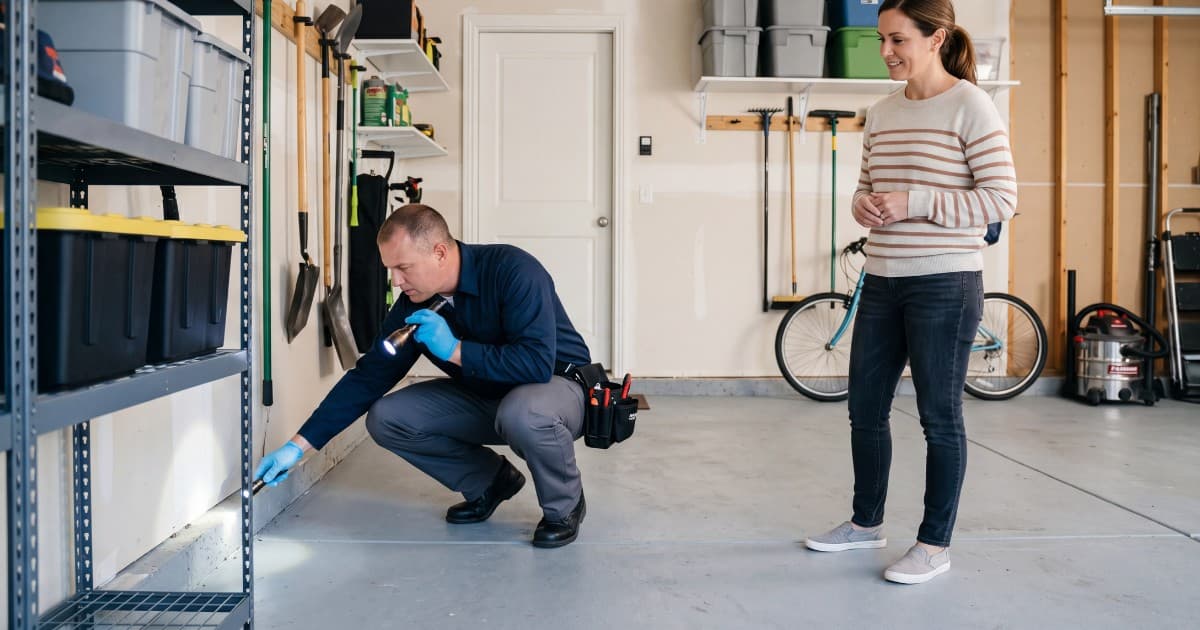
How to prepare for pest control
Most pest control prep boils down to four things: knowing what the company plans to do, clearing access to the rooms being treated, putting away food and dishes, and handling pets and pet items. The exact list shifts with the pest and the treatment. A perimeter spray for ants is light prep. A bed bug treatment is hours of laundry, vacuuming, and bagging. The company should send a prep sheet that spells out the specifics for your visit.
If you haven’t scheduled a visit yet, the what does pest control do guide walks through how a typical visit works, and the pest control cost guide covers the typical pricing ranges by service type.
Before the visit, ask what treatment is planned
Prep changes depending on what the company plans to apply and where. Before the visit, get clear on a few basics:
- Which rooms or areas will be treated, and which will not.
- Whether treatment is exterior only, interior only, or both.
- Whether bait stations, traps, dust, or aerosol products are part of the visit.
- How long people and pets need to stay out of treated rooms.
- Whether the company will send a written prep sheet ahead of the visit.
If anything on the prep sheet conflicts with what you were told on the phone, ask before the visit. The questions to ask before hiring guide is a longer checklist that covers prep, follow-up, and re-service.
Clear access to problem areas
Technicians need to reach the spots pests actually use. That usually means a clear path along baseboards, under sinks, in kitchen and bathroom corners, around exterior foundations, and into garages, basements, and attics if those are part of the visit. A few practical steps:
- Pull furniture a few inches off the walls in rooms being treated.
- Clear shoes, boxes, and laundry baskets away from baseboards.
- Move outdoor items like potted plants and toys away from the foundation.
- Trim shrubs back from the exterior wall if the company asked you to.
- Unlock fence gates, sheds, or crawl space access if those are part of the inspection.
Store food, dishes, and personal items
Most kitchen and pantry treatments ask you to put food, dishes, cookware, and small appliances out of the way. The goal is to keep treatment off surfaces that touch food and to give the technician room to work along baseboards and inside cabinets. Common steps:
- Move open food into the fridge, freezer, or sealed containers.
- Empty the cabinets the company specifically asks you to empty.
- Pull dish racks, drying mats, and counter items away from the sink.
- Clear bathroom counters of toothbrushes, makeup, and open toiletries.
- Put baby items, bottles, and pacifiers away in a sealed bin.
If the prep sheet doesn’t mention food storage, ask. A light perimeter spray usually doesn’t require it. Heavier interior work usually does.
What to do with pets and pet items
Pets need their own prep step. The general rule is that dogs, cats, birds, fish tanks, and small animals should be out of treated rooms during the visit and during whatever drying or airing-out window the company gives you afterward. Steps that usually apply:
- Move food bowls, water bowls, and treats off the floor and away from treated areas.
- Pick up pet beds, blankets, and toys from the rooms being treated.
- Cover fish tanks and turn off the air pump if the company asks.
- Move bird cages and small-animal enclosures to a room that isn’t being treated.
- Plan a walk, a yard, or a friend’s house for dogs and cats during the visit.
Tell the company up front about every animal in the home, including any in the yard. The treatment plan can shift around sensitive pets if the technician knows in advance.
How to prepare for roach, bed bug, rodent, and termite service
The general prep is the same, but each pest has its own specifics. Use this as a starting point and override anything here with what the company’s prep sheet says.
Roach treatment
Empty the cabinets the company asks you to clear, vacuum kitchen and pantry floors, take out the trash, fix any leaks, and pull small appliances back from the wall. Avoid spraying store-bought aerosols ahead of the visit since that can scatter roaches and weaken bait performance. The roach control page covers what treatment usually involves.
Bed bug treatment
Bed bug prep is the heaviest. Wash bedding, clothing, and soft items on a hot cycle, then dry on high heat, bag the items, and keep them sealed until the company gives the all-clear. Vacuum mattresses, box springs, baseboards, and floors. Pull furniture from the walls and empty closet floors. Heat treatments and chemical treatments have different prep, so follow the company’s specific sheet for bed bug exterminators.
Rodent service
Clear access to attics, basements, garages, and under sinks. Pull stored boxes back from walls, point out any sightings or droppings, and unlock crawl space hatches. Don’t move or bait-block any traps the company places. The rodent control page covers what an inspection and exclusion visit usually looks like.
Termite treatment
Termite prep depends on the treatment. Liquid soil treatments need a clear perimeter, so move planters, mulch, hoses, and stored items at least a few feet off the foundation. Bait station systems mostly need access to install or check the stations. Heavier treatments like fumigations have their own multi-day prep that the company will walk you through. The termite treatment page covers the broad approach.
Do you need to leave the house?
For most routine visits, no. Perimeter sprays, exterior treatments, rodent inspections, and bait or trap placement usually don’t require everyone to leave. The cases where people and pets are typically asked to be out of the home for a set window:
- Heavier interior roach treatments.
- Bed bug treatments, both chemical and heat.
- Aerosol-based treatments inside the home.
- Termite fumigations.
- Treatments where the prep sheet specifically asks for re-entry windows.
The right answer comes from the product label and the company’s prep sheet. If you’re unsure, ask the office directly when you book and again when the technician arrives.
What to do after pest control treatment
Once the technician is done, the prep sheet usually tells you what to do next. Common after-visit steps:
- Stay out of treated rooms for the time window the company specifies.
- Ventilate the home if the prep sheet asks for it.
- Wipe down food-prep surfaces if the company calls that out.
- Leave bait stations and traps where they were placed.
- Hold off on mopping or cleaning baseboards in treated rooms until the prep sheet says it’s fine.
- Note any new pest sightings and share them at the next visit.
Some pest activity briefly increases for a few days as treated populations move and disturbed roaches or rodents look for new spots. That usually drops off, but if activity stays heavy past the company’s expected window, call for a re-service. The how often should pest control be done guide covers when a single visit usually needs a follow-up and when an ongoing plan makes more sense.
Questions to ask before the company arrives
A short call before the visit catches most prep surprises. Ask:
- What products and methods the technician plans to use.
- How long people and pets should stay out of treated rooms.
- Which cabinets, drawers, or closets to clear.
- Whether laundry, bedding, or soft items need to be washed.
- What to do with fish tanks, birds, and small animals.
- What re-service looks like if pests come back.
- What follow-up visit is included, if any.
If you’re still deciding whether the visit is worth scheduling, the is pest control worth it guide walks through where DIY tends to hold up and where hiring out makes sense.
Find pest control companies near you
Once you know the prep is realistic for your home, the next step is shortlisting local providers. Browse pest control companies near you by state and city, then ask each one to send a prep sheet along with the written quote.
Pest Select currently lists real local pest control companies in Florida, Texas, and California, with more state coverage rolling out over time.